The history of Chinese writing is, in a nutshell, the history of Chinese calligraphy. From oracle bones to bronzeware scripts, to small seal script, to clerical script, to cursive script, and finally to regular script, the history of the Chinese calligraphy has been evolving for three thousand years has been evolving for three thousand years. In China, calligraphy eventually formed a self-sustaining art, occupying an immensely respected position. The cursive, semi-cursive, and regular script especially, have become the dominant Chinese bookhand in the past 1,000 years, profoundly influencing Chinese civilization and the tradition of Han culture.
The main purpose of this study is to explore and present how traditional Chinese calligraphy becomes an industrialized, standardized font and how all of these influences are associated with contemporary Chinese society and modern civilization.
Speaker
Wei Ming
Wei Ming is the Associate Director at Font Product Division of Beijing Founder Electronics Co Ltd, and a member of the Chinese Artists Association. Her works have been collected by Sichuan Art Museum. She designed the Beijing Olympic subway visual information system, used in the Olympic Extension Line during the 2008 Beijing Olympic Games. It won her the first prize at the National Art Exhibition. She received an MA degree in Communication Design from Central Saint Martins, University of the Arts, London. After returning to China, she joined FounderType and now work on font product research and project management. She is committed to promotion and exchanges of Chinese and English font products.
Speaker
Wen Wang
DirectorFounderType
Wen Wang graduated from the Beijing Institute Of Graphic Communication, and has worked in both the graphics and type design eras for 22 years. Wang is the vice design director of font design at FounderType, and is a Member of the Shenzhen Graphic Design Association (SGDA). Major works: Founder Bangshu Kai, Founder Bangshu Xing, Founder Qu Song, and Founder Yashi Hei.
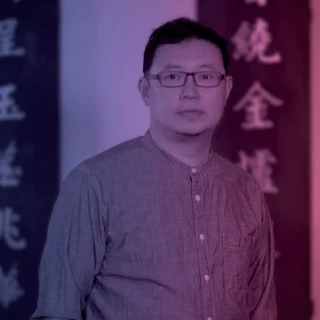 Wen Wang