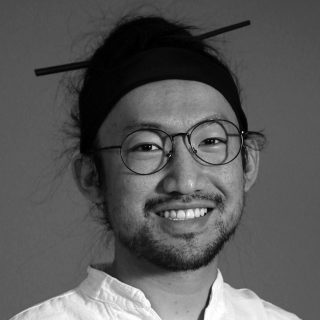
Speaker Kedi Zhang
Kedi grew up in the most ethnically diverse province of China. This remote and often overlooked eastern rim of the Himalayan mountains has provided shelter to successive waves of immigrants throughout history. From the earliest known indigenous groups—Mon-Khmer (Cambodian, Vietnamese), Kra-Dai (Thai, Lao)—to Tibeto-Burman (Tibetan, Burmese, Lolo), Sinic (Han Chinese), Hmong-Mien (Hmong), and Altaic (Mongolian), the region has been a cultural crossroads for centuries.
At the same time, Kedi made his way to California, where he now designs user experiences for enterprise-grade AI model adoption.
This contrast between life in Silicon Valley and Shangri-La—where Kedi learned traditional Thangka painting and Tibetan calligraphy, just a two-hour drive from his hometown—has given him deep awareness of the challenges marginalized cultural communities face due to cutting-edge technology, especially generative AI, which is reshaping the entire ecosystem of information consumption and reproduction.
Therefore, outside his work popularizing the adoption of AI models, Kedi dedicates his spare time to projects focused on indigenous language revitalization, ethnomusicology, and mentoring local designers in his hometown. One of his recent outcomes is the creation of the first-ever sans-serif variable font for the Tibetan Ume script, which he will cover in his presentation.