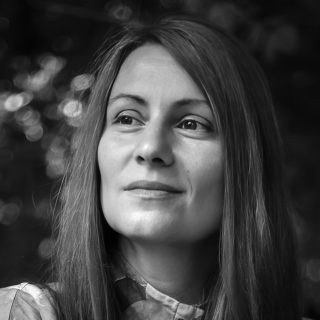
 Irma Puškarević
 The recent history of Southeast Europe has left a legacy of fragmentation, discontinuity, and radical institutional change when it comes to preserving cultural heritage. Archives and collections are challenging to trace. Oftentimes, they are incomplete or partial, and sometimes private. Specifically, typographic collections are hyper-localized, and usually not connected to current systems of study. Rooted in the region’s historic material, this proposal documents a years-long effort of slow discovery across in-person correspondence, drawing on and developing personal networks, bridging gaps between typographic material, changing technologies, and the diverse multilingual communities of the South Slavic landscape.
The talk shows a platform in development to capture and record the typography of a region that once was in dialogue with international currents, and operating in an isolated cultural space. This platform maps material geographically, historically, and in terms of disciplines, accessibility of materials, and formats. It outlines the discourse on preservation tools and systems of analysis for cultural spaces with complex histories. The material to be shown focuses on progressive women’s publications, centering the work of Women’s Antifascist Front, including magazines, posters, and ephemera. It combines calligraphy, lettering, image making techniques, and methods of formalized, improvized, and illegal printing techniques. Visually and linguistically, the material represents intersecting topics emphasising gender issues, education, politics of resistance, culture, and lifestyle.
By showcasing the platform for documenting the region’s typographic heritage, the talk considers the indispensable role of digital tools. More specifically, it brings attention to the practices of preservation that support cultural responsiveness to new technologies.