At a special ATypI Board meeting on September 6, Carima El-Behairy was unanimously elected ATypI President, replacing Thomas Phinney who was stepping down after one year (2023–2024). She becomes ATypI’s second ever woman president. Carolina Laudon, ATypI’s first woman president (2020–2022), interviewed Carima about her background, her career with typography, and her association with ATypI.
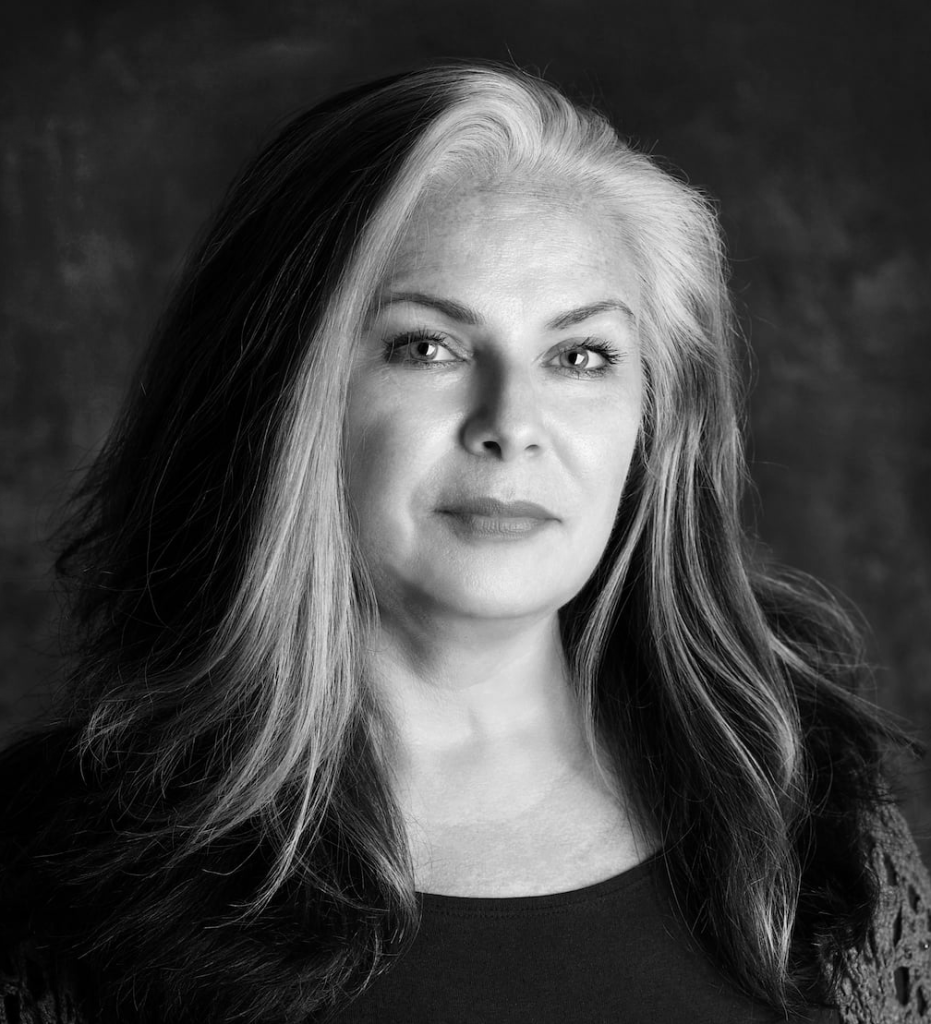
Carolina Laudon: Tell us a little about yourself.
Carima El-Behairy: I am from Buffalo—that’s in upstate New York, not far from the Canadian border. My parents moved here in 1963 after meeting at Ohio State University in history class and finishing their degrees. My father was an international student from Egypt, getting his PhD in Political Science, and my mother was a dual degree in English and History. They never imagined moving to Buffalo, raising a family there, or making it their home for over 60 years.
Growing up in Buffalo was easy: 10 minutes from Canada, 100 km from Toronto, and only a 1-hour flight from New York City. Travel was always an option and we did it often. My parents felt family was important, so visits to Ohio (where my mother was from) and Cairo (where my father’s family resided) were frequent and anticipated—my mother’s favorite story is my 3rd birthday party in the air over Czechoslovakia as we flew to Cairo one year. I have lived in 4 countries (on 3 continents before the age of 16), 3 states, and traveled to more cities than I can count. This exposure to many different cultures as a child has enabled me to connect and relate to all types of people, regardless of age, gender, or nationality.
I have three siblings: two sisters (one in Ohio and the other In Minnesota) and a brother (living in Michigan), and my mother who lives with me, along with my two sons, three cats, and a dog.
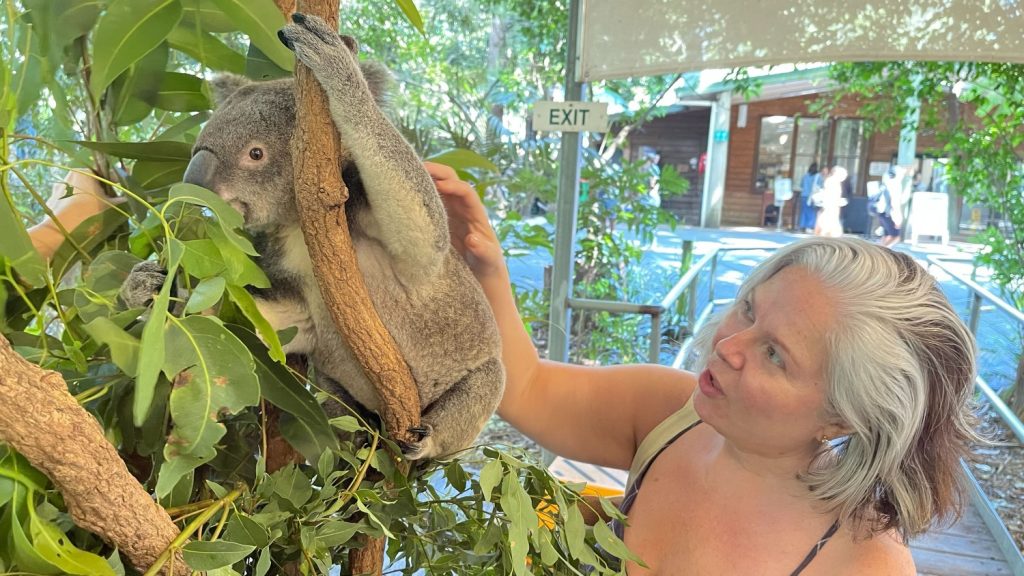
Carolina: Describe your typical day.
Carima: My typical day starts about 5 to 5:30 am. I do not use an alarm clock; my internal clock wakes me up then. I let the dog out and then start my day. That is the only typical part of my day—every day is unique and provides quite a bit of activity. I try to get to the office by 7:30, but I am prone to try to schedule early morning meetings if allowed. I also tend to have evening obligations, from lectures, art openings, dinners, etc.—a typical week will include 4–5 nights committed.
Carolina: Do you have a favorite kind of music to listen to while working?
Carima: I listen to a special mix on Spotify—Daily Mix 1 and 2 while I work. It is new and upcoming work from bands like Young the Giant, Bad Suns, Joywave… anything they want to put in it that day.
Carolina: What are the sources of information you consult?
Carima: I read The New York Times online as well as curated sources on Apple News, including the BBC and Al Jazeera.
Carolina: Tell us about your relationship with typefaces.
Carima: This is a very difficult question. I have been in the business of type for the past 30 years and the changes have, in some cases, been very gradual and in others, stark and concerning.
When we started P22 in 1994, we were very young and idealistic and honestly entered the type world from the back door, from where we came from—the museum/gift world. We were artists, not designers. We understood if we left history in the past we could never move forward and create new. History was a place to build a strong foundation, which is why we started with revivals, bringing back what would have otherwise been lost.
For type to remain valued, it has to have value. The devaluation of type through “free” or deeply reduced pricing removes the ability for a designer to make a living. If they can’t make a living at what they love, they will make it elsewhere, and type will be reduced to the basics and no longer a usable tool. I think AI is a useable tool, but not creative—we need to sustain the individual creativity of typography. If AI is used to replace the creative, typography and designers will be the losers.
Carolina: Do you remember when you decided to pursue your career in design/architecture? What made you choose this?
Carima: It’s funny—I never made a conscious choice. I could always draw, painting came naturally, and when calligraphy was introduced in grammar school art class, it was a natural fit. I always understood spatial relationships, and, from a very young age, I was encouraged to go into architecture by my parents. My brother also has a background in engineering and my youngest sister is a textile designer—so you could say it was in the family.
Carolina: When you started, who were the teachers, mentors, or professionals who had the most impact on you?
Carima: Both my parents were teachers and I think they had the most impact on me, reinforcing my natural talents and guiding me when needed. I have been very lucky to have had a number of influential people in my life—for example, I still keep in touch with my second grade teacher, who left teaching to run her family business.
Carolina: When, why, and how did you join ATypI?
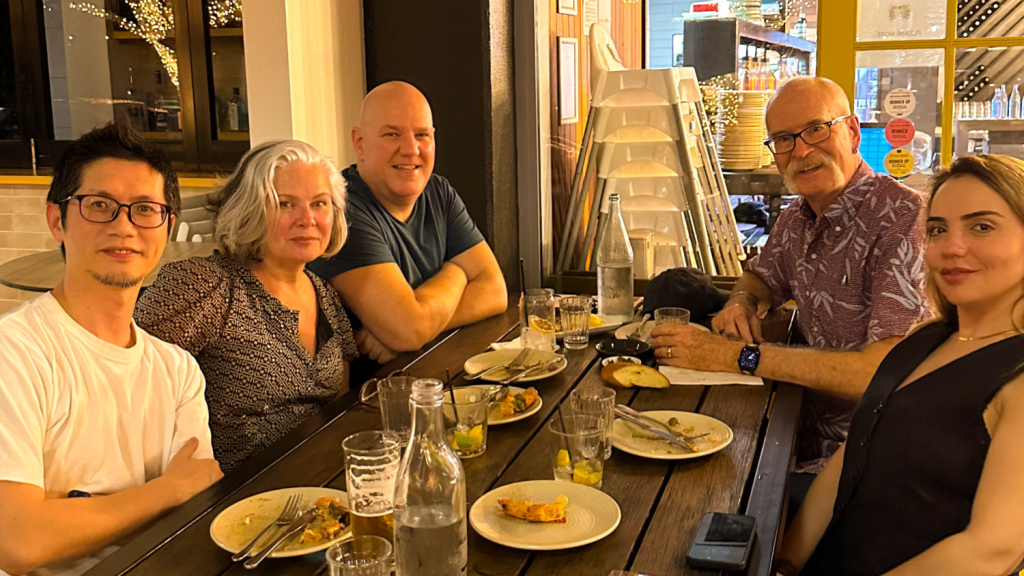
Carima: I attended my first ATypI conference in 2003 in Vancouver, BC, Canada. Prior to this, I was involved in TypeCon—helping them incorporate and get their 501(c)(3) nonprofit status. I had been part of the site committee, serving as a volunteer from 1999 to 2008. I even hosted the conference when it came to Buffalo in 2008. ATypI at the time was a more glamorous conference. Everyone wore suits and it was held in more exotic global locations. I started attending to meet more folks like me, with a more global view of how the type market worked.
Carolina: What are your aims with your presidency for the organization?
Carima: I want to see ATypI build capacity, become sustainable for years to come, and be able to address the needs of our diverse and global community. It has so much potential. Yet on the other side of the coin, that same potential has many challenges due to that diversity and global needs.
Carolina: Do you have some words for someone who is thinking about joining or getting involved with the organization or attending an event?
Carima: Typography has always been a solitary vocation, even before Covid and remote working. Communities like ATypI exist to provide that social interaction we all need. ATypI is a safe place, where you are accepted for a shared love of typography, technology, and, honestly, geekiness. Conversations around the design of a lower case ‘a’ are the norm, everyone knows what kerning is, and you never have to eliminate a double space after the period.
Carolina: Many thanks for this. I wish you the very best for your admirable ambitions for ATypI.
Carima: Thank you for the warm wishes.